
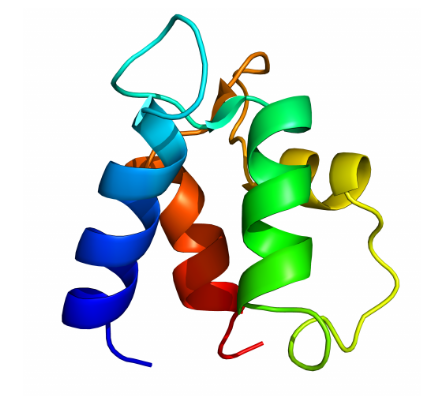
Calbindin D9K
Recombinant Proteins & Calcium-Binding Proteins
Calbindin D9K
Recombinant bovine calcium-binding protein expressed in E. coli, supplied with two calcium ions bound. Suitable for biochemical research, protein characterization, and NMR studies.

Calbindin D9K Recombinant Protein
Product Information
| Catalog Number | 1772-G02CLB01-01 |
| Product Name | Calbindin D9K |
| Package Size | 1 mg |
| Molecular Weight | 8.5 kDa (calculated) |
| Purity | Greater than 95% by SDS-PAGE |
| Expression System | E. coli |
| Storage Temperature | -20°C |
| Shipping Condition | Dry Ice |
| Hazardous | No |
Availability & Ordering
24/48H Stock Items & 2 to 6 Weeks non Stock Items.
Login for PriceContact our team for product information and purchasing assistance.
Send RequestProduct Description
Calbindin D9K, also known as Calbindin, Calbindin-9k, S100-G, CABP, or vitamin D-dependent calcium-binding protein, is a small calcium-binding protein involved in calcium regulation and transport.
This recombinant protein is cloned from bovine cDNA and expressed in Escherichia coli (E. coli). The protein corresponds to a mutant P47M form of Calbindin D9K, comprising residues 5–79, based on UniProtKB accession P02633.
The protein has a calculated molecular weight of approximately 8.5 kDa and is supplied with two calcium ions (Ca²⁺) bound. Its defined calcium-binding characteristics make it useful for studying protein structure, calcium coordination, and metal-binding interactions.
Calbindin D9K is supplied as a 1.0 mg/mL solution in 50 mM ammonium acetate at pH 6.0, making it suitable for biochemical characterization and structural studies, including nuclear magnetic resonance (NMR) experiments.
Key Features and Benefits
- Recombinant Protein: Produced using an E. coli expression system.
- Calcium-Binding Protein: Supplied with two calcium ions bound.
- High Purity: Greater than 95% purity as determined by SDS-PAGE.
- Defined Molecular Weight: Calculated molecular weight of approximately 8.5 kDa.
- Specified Protein Variant: P47M mutant form corresponding to residues 5–79.
- NMR Research: Suitable for structural and spectroscopic investigations.
- Controlled Formulation: Supplied in 50 mM ammonium acetate at pH 6.0.
Biological Function of Calbindin D9K
Calbindin D9K belongs to the calcium-binding protein family and plays a role in intracellular calcium regulation. It contains calcium-binding EF-hand motifs that allow it to coordinate calcium ions through specific structural regions.
Calcium-binding proteins are important in many biological processes because calcium ions act as intracellular signaling molecules. Proteins such as Calbindin D9K help researchers understand calcium coordination, protein conformation, and interactions between proteins and metal ions.
Calbindin D9K is particularly useful as a model protein in structural biology because of its relatively small size and well-characterized calcium-binding properties.
Research Applications
- Calcium-Binding Research: Investigation of calcium coordination and binding properties.
- Structural Biology: Analysis of protein structure, folding, and conformational changes.
- NMR Spectroscopy: Structural characterization and investigation of protein dynamics.
- Protein Biochemistry: Study of protein stability, interactions, and biochemical properties.
- Metal-Binding Studies: Research into interactions between proteins and metal ions.
- Mutant Protein Analysis: Investigation of the structural and biochemical properties of the P47M variant.
Protein Sequence
The following amino acid sequence corresponds to the supplied Calbindin D9K P47M variant:
KSPEELKGIFEKYAAKEGDPNQLSKEELKLLLQTEFPSLLKGPSTLDELFEELDKNGDGEVSFEEFQVLVKKISQ
Protein sequence supplied for the P47M variant, residues 5–79.
Purity and Quality Control
Calbindin D9K has a purity greater than 95%, determined by SDS-PAGE analysis.
Under denaturing electrophoresis conditions, the protein is observed as a single band migrating below the 14.4 kDa molecular weight marker.
Protein concentration is calculated by measuring absorbance at 280 nm using a calculated extinction coefficient of 1,280 M⁻¹ cm⁻¹.
Product Formulation and Characteristics
| Parameter | Specification |
|---|---|
| Protein Concentration | 1.0 mg/mL |
| Buffer | Ammonium acetate, 50 mM |
| Buffer pH | 6.0 |
| Calcium Content | 2 Ca²⁺ ions bound |
| Extinction Coefficient | 1,280 M⁻¹ cm⁻¹ at 280 nm |
| Maximum Concentration | Up to 2 mM under specified conditions |
| Purity | Greater than 95% |
Important: To minimize precipitation or protein dimerization, the product can be concentrated up to 2 mM under the specified formulation conditions.
Storage and Handling Instructions
Store Calbindin D9K at -20°C. The protein has demonstrated stability under the following conditions:
| Temperature | Stability |
|---|---|
| -20°C | Recommended storage temperature |
| 4°C | At least 2 weeks |
| 25°C | Several hours |
- After the initial thaw, divide the protein into individual aliquots.
- Refreeze aliquots at -20°C.
- Avoid repeated freeze-thaw cycles to help maintain protein stability.
- For NMR applications, return the sample to 4°C after experiments, as specified in the product instructions.
Alternative Calbindin Products
Explore related Calbindin proteins and antibodies for different research applications.
| Catalog | Product Name |
|---|---|
| 045843-01 | Calbindin |
| 476993 | CALB1 (Calbindin, Calbindin 1, 28kD) |
| E55A14533 | Calbindin Antibody |
| MBS500050-01 | Anti-Calbindin |
Scientific References
- Kördel, J., Pearlman, D.A. & Chazin, W.J. (1997). Journal of Biomolecular NMR, 10(3), 231–243.
- Williams, R.J. (1996). Cell Calcium, 20(1), 87–93.
- Skelton, N.J., Kördel, J. & Chazin, W.J. (1995). Journal of Molecular Biology, 249(2), 441–462.
Frequently Asked Questions
1. What is Calbindin D9K?
Calbindin D9K is a small calcium-binding protein that participates in calcium regulation. It is commonly used as a model protein in biochemical and structural biology research.
2. What is the molecular weight of Calbindin D9K?
The calculated molecular weight of this recombinant Calbindin D9K variant is approximately 8.5 kDa.
3. How is Calbindin D9K produced?
The protein is cloned from bovine cDNA and expressed using an Escherichia coli recombinant expression system.
4. What is the purity of this protein?
The protein has a purity greater than 95%, determined by SDS-PAGE analysis.
5. How should Calbindin D9K be stored?
Store at -20°C. After thawing, aliquot the protein and refreeze individual portions to avoid repeated freeze-thaw cycles.
6. Is Calbindin D9K suitable for NMR studies?
Yes. The product is suitable for NMR research, and isotope-related assignment information is available for different Calbindin D9K preparations.
Explore Calbindin D9K for Protein Research
Discover Calbindin D9K (1772-G02CLB01-01), a high-purity recombinant calcium-binding protein for biochemical, structural biology, and NMR research applications.
Login for PriceContact our team for technical questions and ordering assistance.
Recent Posts
-
Calbindin D9K
Recombinant Proteins & Calcium-Binding Proteins Calbindin D9K Recombinant bovine calcium-binding p …30th Oct 2026 -
Mouse ALT1/GPT1 Recombinant Protein
Recombinant Protein | Metabolism Research Mouse ALT1/GPT1 Recombinant Protein Recombinant alanine …30th Oct 2026 -
Anti-CD9 Rabbit Monoclonal Antibody: Structure, Biological Function, and Research Applications
Immunology | Cell Biology | Antibody Research Anti-CD9 Rabbit Monoclonal Antibody: Structure, Biol …29th Oct 2026